CMS market penetration
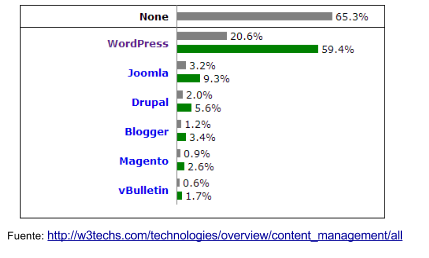
According to W3Techs1, 65.3% of the ten million websites analysed do not use a content management system.
If CMSs account for around 35% of all websites worldwide, the importance of these tools is immediately apparent.
The following chart shows WordPress, Joomla and Drupal leading the market. WordPress alone has a remarkable worldwide presence. Green indicates each system’s share among CMS-based websites, whereas grey indicates its share of all websites. To say that WordPress powers more than 20% of the world’s websites is therefore a significant statement.
Trends in interest in CMSs
Other data further illustrate the scale of these applications and their place in society. Trends in searches for relevant keywords provide another perspective. Google Trends2 is used to draw the conclusions shown in the following chart.
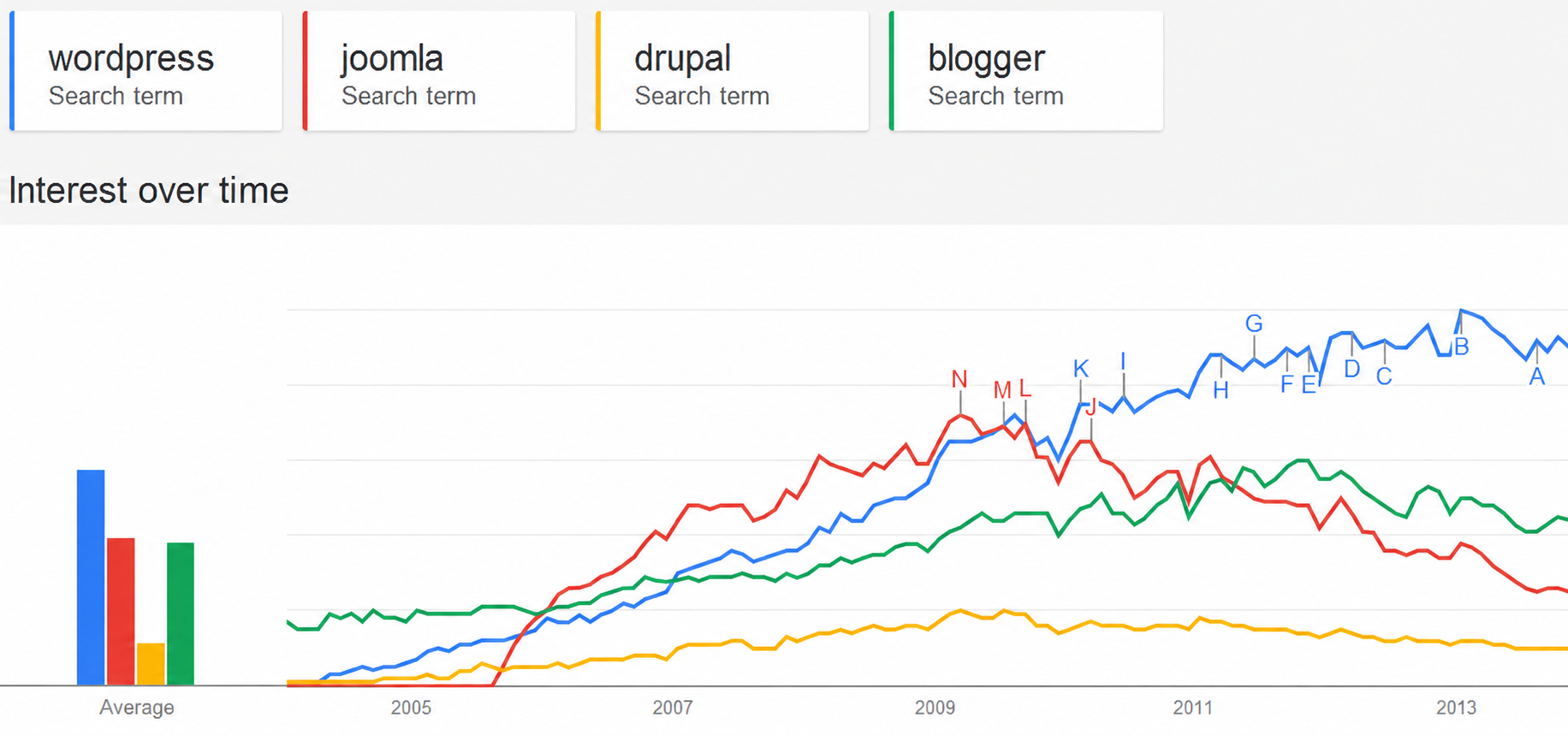
Although Joomla shows a downward trend, all the systems have grown from their values at the chart’s starting point in 2005. CMSs are a pillar of the modern web.
CMS performance
CMS codebases have undoubtedly grown enormously. For some projects, they can become unwieldy.
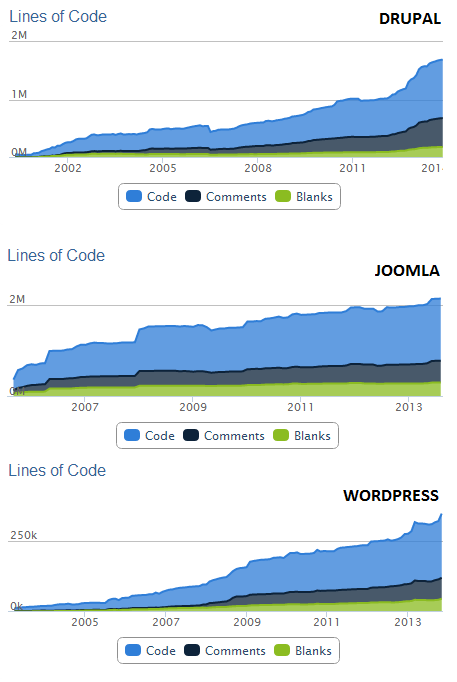
The tool provided by Ohloh.net3 allows us to draw some interesting conclusions.
All the CMSs have substantially increased their line counts in recent years, further demonstrating that they are becoming more comprehensive and therefore heavier applications.
These charts do not include contributions from the wider community: they account only for the company developing each CMS’s core.
CMS security issues
Searching google.es for “hack joomla” produces more than three million results. Hundreds of posts describe security vulnerabilities and explain how to reproduce them.
Searching for the Spanish phrase “parche seguridad joomla” (“Joomla security patch”) produces almost 30,000 results. Hundreds of links lead to security patches for different versions.
Caching
The main problem I have identified in market-leading CMSs is that they all use time-based caching. On news websites, where information changes rapidly and articles are often edited live, caching can cause visitors to see outdated content.
CMSs do provide a way to clear their caches, but this is a manual process that depends on user training and therefore often causes problems.


